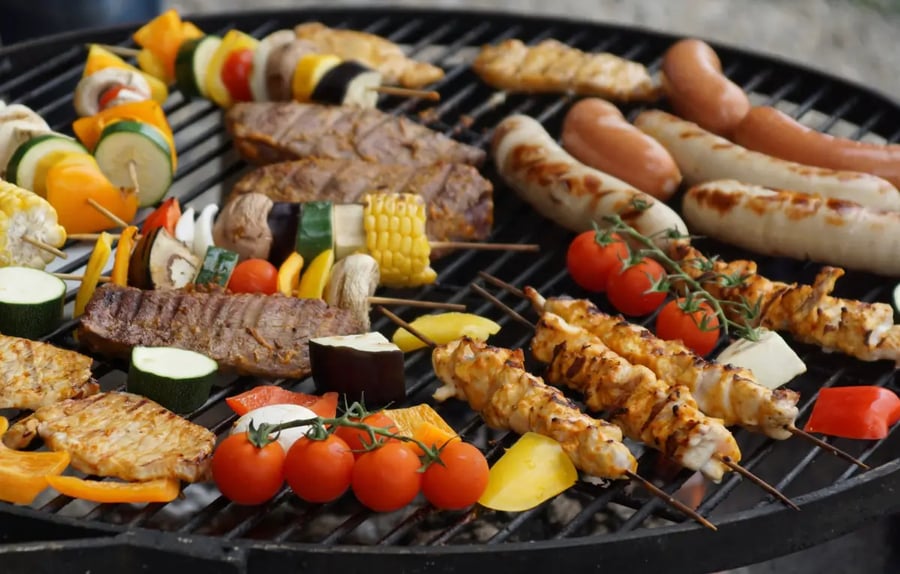
Summer changes the way people cook. Ovens sit idle, grills come out of storage, and menus shift toward fresh produce, lighter plates, and meals meant to be shared outdoors. Home cooks who want to make the most of the season don’t need a long list of complicated recipes. They just need a handful of reliable techniques, a willingness to cook with what is ripe right now, and an appreciation for the people gathered around the table.
Few things capture that spirit better than the way Paul Pavliscak approaches food: as a hobby built on family, practice, and steady improvement over time.
Paul Pavliscak, Rochester, MI, area native and now a medical student living in Oakland Township, developed his cooking skills the same way he built everything else in his life, through repetition and patience. Drawing inspiration from Food Network shows, YouTube videos, and time in the kitchen with his family, he has worked his way across a wide range of dishes, from beef and steak to pasta and fish. That range happens to map neatly onto the foods that define summer cooking, which makes his approach a useful template for anyone planning warm-weather menus.
Start With What’s in Season
The simplest way to improve summer cooking is to build meals around produce at its peak. Sweet corn, tomatoes, zucchini, bell peppers, stone fruit, and fresh herbs all hit their stride between June and September, and they need very little help to taste good.
A tomato salad wants only salt, olive oil, and basil. Corn can go straight onto the grill in its husk. Zucchini sliced into planks, brushed with oil, and charred for a few minutes per side becomes a side dish worth repeating all season.
Shopping this way also simplifies planning. Instead of choosing a recipe and hunting for ingredients, cooks can start at the farmers market or produce aisle, see what looks best, and let the ingredients set the menu. The habit rewards flexibility, and it keeps summer meals varied without demanding much extra effort.
Paul Pavliscak on Mastering the Grill: Beef, Steak, and Fish
Grilling sits at the center of most summer cooking, and it is also where many home cooks stall. The fundamentals are straightforward.
For steak, a hot, clean grate and a dry surface on the meat matter more than any marinade. Season generously, sear over direct heat, and finish over indirect heat if the cut is thick. Resting the meat for several minutes after cooking lets the juices settle and pays off in every slice. Fish asks for the opposite instincts: gentler heat, more attention, less handling. Firm fillets hold together best on the grill, and a well-oiled grate or a simple foil packet prevents sticking.
Beef, steak, and fish are all part of the repertoire Pavliscak has developed over years of practice, and his experience points to a broader truth about grilling. Improvement comes from cooking the same foods again and again, adjusting one variable at a time, not from chasing novelty every weekend.
That mindset of building skills through repetition is the same one he applied as a catcher working his way onto high school and college baseball rosters, and it translates directly to the kitchen.
Pasta and Lighter Plates for Hot Evenings
Not every summer meal belongs on the grill. On the hottest evenings, pasta offers a fast route to dinner that keeps the kitchen cool, especially when the sauce requires little or no cooking.
Chopped ripe tomatoes, garlic, olive oil, and torn basil tossed with hot pasta make a complete meal in the time it takes the water to boil. Cold pasta salads, dressed with vinaigrette instead of mayonnaise, hold up well outdoors and travel easily to cookouts and picnics.
Lighter plates follow the same logic. Grain bowls built on farro or rice, topped with grilled vegetables and a simple dressing, stretch leftovers into a second meal. Sandwiches layered with grilled chicken or vegetables turn weekend grilling into weekday lunches.
Do the hot work once, then reuse it in cooler forms for days afterward.
Keeping Family Recipes on the Summer Table
Seasonal cooking is not only about new ideas. It is also about the dishes that carry a family's history, and summer gatherings are often where those recipes reappear.
For Pavliscak, two dishes stand out: his grandfather’s tuna noodle casserole, known in the family as “Grandpa's Noodles,” and his grandfather’s legendary spaghetti sauce. Making them is less about the food itself and more about keeping family recipes alive, preserving a connection to the man who helped raise him and who passed away in 2015.
Any home cook can borrow this practice. Write down the dishes an older relative makes from memory, measurements, and all, before the details are lost. Cook them together at least once, because technique rarely survives on paper alone. Then, give the dish a regular place at summer tables, where relaxed schedules and bigger gatherings make it easy to serve food with a story attached.
Learning From Screens, Then Practicing in Person
Cooking shows and online videos have made culinary instruction more accessible than at any point in history, and they are a legitimate way to learn. Pavliscak draws much of his inspiration from Food Network programs and YouTube channels, then tests what he sees in his own kitchen, often cooking alongside his family. Watching demonstrates the technique; making memories around the table is what turns the technique into a lasting habit.
The trick is to stay active about it. Watch a video for one specific skill—slicing an onion, trussing a chicken, judging steak doneness by touch—then practice it the same week. Over a single summer, a cook who learns one technique per week will end the season with a dozen new skills and a far more confident hand at the stove or grill.
Menus for Game Days and Long Afternoons
Summer cooking pairs naturally with summer baseball, a connection Pavliscak knows well as a devoted Detroit Tigers fan who rarely misses a game. Afternoon and evening games invite a particular style of eating: food that can be made ahead, served at room temperature, and picked at over several innings.
Grilled sausages, corn on the cob, pasta salad, and a platter of sliced watermelon cover the essentials without requiring anyone to leave the couch or the backyard during a key at-bat.
For bigger gatherings, batch cooking earlier in the day keeps hosts out of the kitchen when guests arrive. A pot of sauce simmered in the morning, proteins grilled an hour ahead and sliced just before serving, and desserts that need only refrigeration all reduce the last-minute scramble.
A Season Built Around People
The techniques matter, but the throughline of good summer cooking is the same one that runs through Pavliscak’s life: never take a moment for granted, and make as many memories as possible with the people who matter most.
A ripe tomato, a well-rested steak, a recipe inherited from a grandfather. Each one brings people to the table and keeps them there a little longer.
Paul Pavliscak is a medical student from Oakland Township, Michigan, who grew up near Rochester, MI. A former catcher for Kalamazoo College's Division III baseball program, he graduated Cum Laude from both the University of Detroit Jesuit High School and Kalamazoo College. Away from his studies, he enjoys cooking with his family and following the Detroit Tigers.
Copyright © 2026 California Business Journal. All Rights Reserved.
For California Business Journal Disclaimers, go to /terms-conditions/.