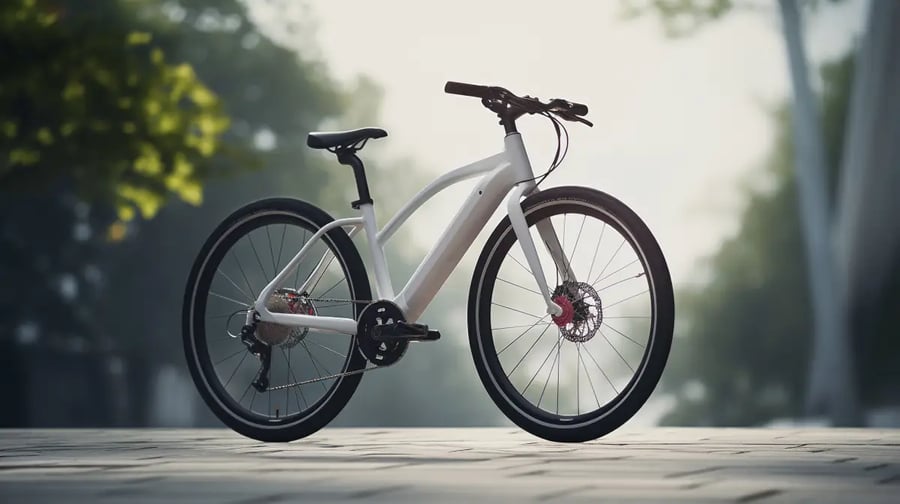
A typical electric bike can travel around 40 to 120 km (25–75 miles) per charge, although actual range varies significantly. Lightweight city eBikes may manage only 30–55 km in everyday conditions, while long-range and dual-battery models can exceed 100 km.
The most useful number to check is battery capacity in watt-hours (Wh) rather than relying only on the manufacturer's advertised maximum range.
How to Calculate E-Bike Range
First, calculate battery capacity:
Battery capacity (Wh) = Voltage (V) × Capacity (Ah)
For example:
48V × 15Ah = 720Wh
Then estimate range based on energy consumption:
Estimated range (km) = Battery capacity (Wh) ÷ Energy consumption (Wh/km)
With a 720Wh battery:
- At 8Wh/km: 90 km
- At 12Wh/km: 60 km
- At 18Wh/km: 40 km
This explains why two riders using the same battery can experience dramatically different ranges.
Real-World Example: Himiway D5 2.0 20"
The Himiway D5 2.0 20-inch provides a useful example. It uses a 48V 15Ah (720Wh) Samsung/LG battery, combined with a 750W motor producing 90Nm of torque and 20 × 4.0-inch fat tires.
Its listed maximum range is 70 miles with pedal assist and approximately 40 miles using the throttle. Converted to kilometers, that's roughly 113 km with pedal assist and 64 km with throttle.
However, "up to 113 km" doesn't mean every rider will achieve 113 km. With a 720Wh battery, illustrative consumption calculations show how much conditions matter:
| Riding Conditions | Estimated Range |
| Very efficient, low assist | 111 km |
| Efficient riding | 90 km |
| Normal mixed riding | 72 km |
| Higher assist / hills | 60 km |
| Aggressive riding | 48 km |
| Heavy throttle / difficult terrain | 40 km |
These figures are calculations rather than official test results.
What Reduces E-Bike Range?
Several factors can significantly shorten the distance you get from one charge. Higher pedal-assist settings make the motor perform more work, while hills increase the energy required to move the bike and rider. Higher speeds also increase aerodynamic drag.
Fat tires can add rolling resistance, particularly at low pressure. Rider weight, cargo, frequent stop-and-go acceleration, and cold weather can further reduce practical range.
How Much Range Do You Actually Need?
Don't choose an eBike based on your exact daily distance. Keeping approximately 20–30% range in reserve provides protection against hills, wind, cold weather, detours, and battery aging.
For example, if you need to travel 50 km:
50 km ÷ 0.75 = 66.7 km
An eBike capable of delivering around 65–70 km under your normal riding conditions would therefore be a more practical choice.
To maximize range, use lower assist levels, pedal more, maintain moderate speeds, keep tires properly inflated, avoid hard acceleration, reduce unnecessary cargo, and maintain your drivetrain.
Ultimately, battery size tells you how much energy you have, but riding conditions determine how many kilometers you actually get from it.
Copyright © 2026 California Business Journal. All Rights Reserved.
For California Business Journal Disclaimers, go to /terms-conditions/.