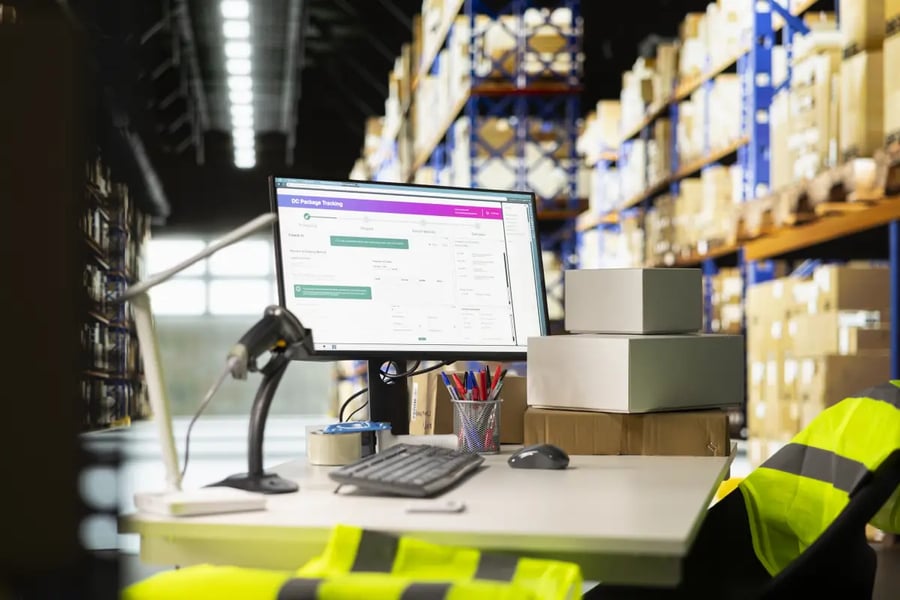
Every courier and same-day delivery business runs on the same fragile chain of steps. An order arrives, someone plans a route, a driver is assigned, the customer waits for news, and — eventually — proof of delivery finds its way back to the office. When any link in that chain breaks, the cost lands squarely on your margin. Delivery workflow automation replaces the manual chain with one connected system, so orders, routes, dispatch, tracking and reporting all talk to each other instead of living in separate spreadsheets and phone calls.
In practice, that automation is delivered by delivery management software — a single platform that runs the whole journey from booking to signed proof of delivery, with far fewer people touching each job along the way.
The stakes sit in the final mile. Last-mile delivery now accounts for roughly 53% of total shipping costs, and Capgemini’s research warns that profits can fall by up to 26% within three years where last-mile operations are left unoptimised. In the UK, failed “first-time” deliveries alone have been estimated to cost retailers, carriers and shoppers around £1.6 billion a year (IMRG). Automation targets exactly these leaks: the missed drop, the wasted mile, the invoice that goes out late.
What is delivery workflow automation?
Delivery workflow automation is the use of software to run each stage of a delivery — from order capture to proof of delivery — with as little manual input as possible. It links your delivery operations software, delivery dispatch software and delivery tracking software so information flows automatically between stages rather than being re-typed at every handoff. The result is fewer errors, faster turnarounds, and a live picture of the whole operation on one screen.
How delivery management software automates the workflow
A modern platform automates the seven stages every courier repeats every single day:
- Order intake — bookings sync automatically from e-commerce channels, APIs or a customer portal, removing manual entry.
- Labels and manifests — generated in bulk and ready for the warehouse in seconds.
- Route optimisation — the system sequences multi-drop routing by distance, time window and vehicle capacity.
- Dispatch and driver assignment — jobs auto-allocate to the nearest suitable driver, replacing manual guesswork.
- Delivery notifications — SMS and email updates with live ETAs fire without anyone lifting a finger.
- Real-time tracking — dispatchers watch every vehicle move and react to delays early, not after a complaint.
- Proof of delivery — drivers capture a signature, photo and OTP in the driver app, and reports update the moment the job closes.
That routing engine is the heart of the system. Strong route optimisation software is what turns a raw list of drops into the shortest viable run — cutting fuel, mileage and the failed deliveries that come from drivers rushing an unplanned route. Pair it with a mobile delivery driver app and every completed job feeds straight back into reporting and invoicing.
What businesses gain from automating delivery operations
Automated delivery management cuts admin time, lowers failed deliveries and gives customers the tracking visibility they now expect as standard. The practical wins stack up fast: address validation and OTP verification reduce missed drops; optimised routes trim fuel and mileage; automated invoicing shortens the cash cycle; and time-stamped proof of delivery settles disputes without a paper trail. For a same-day operator, removing even two unnecessary stops per driver compounds into real savings across a full fleet.
When automation is not the answer
A caveat worth stating plainly, from experience: automation is not a cure for a broken process. If your address data is messy, your pricing rules are undefined, or your drivers are reluctant to work through an app, software will simply automate the chaos faster. The operators who see the strongest returns clean their data, agree their dispatch rules, and bring drivers on board first — then let the system enforce the standard consistently. Treat automated delivery management as an amplifier of a sound process, not a substitute for one.
Bringing it together with InstaDispatch
InstaDispatch pulls order intake, routing, dispatch, real-time tracking and proof of delivery into a single courier management software platform built for UK couriers, retailers and same-day delivery fleets. Whether you run a handful of drivers or thousands, the seven-stage workflow above runs the same way — automatically, and without the spreadsheet gymnastics.
Copyright © 2026 California Business Journal. All Rights Reserved.
For California Business Journal Disclaimers, go to /terms-conditions/.