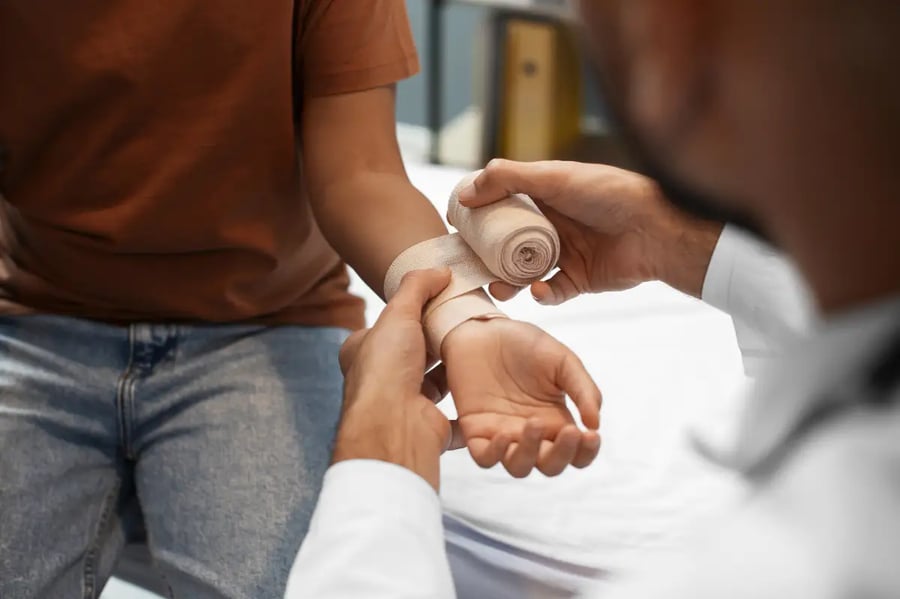
A hand braced against the steering wheel, an arm thrown out toward the dashboard, or a palm pushed back by a deploying airbag. The wrist absorbs a surprising share of crash force, and it does so in a part of the body that is easy to ignore while a person is still shaking. A wrist injury after a car accident often hides behind louder complaints such as neck stiffness or a bruised knee.
This article explains how wrist and hand injuries after a crash are commonly overlooked, the symptoms to watch for, and how diagnosis and treatment usually unfold.
Why These Injuries Get Overlooked
The wrist and hand contain many small bones, ligaments, tendons, and nerves packed into a small space. Damage may cause little visible swelling in the first few hours, while adrenaline and stress can temporarily mask pain. Emergency departments also prioritise life-threatening injuries, allowing less obvious wrist injuries to go unnoticed.
Signs of a Wrist or Hand Injury After a Crash
Symptoms may seem minor at first, but delaying evaluation can allow fractures or ligament injuries to worsen.
What to Watch For
- Swelling across the back of the wrist that does not settle within a day or two
- Pain at the base of the thumb when gripping, twisting, or pushing
- A visible bump, angle, or step-off along the forearm just above the wrist
- Numbness or tingling in the thumb, index, or middle finger
- Weakness when opening a bottle, holding a phone, or steering
- Bruising across the palm or knuckles that appears after the first day
Some fractures and ligament injuries become more noticeable over time as swelling and stiffness increase. Scaphoid fractures, for example, may not appear on an initial X-ray, so repeat or advanced imaging may be necessary if thumb-side pain continues despite a normal first scan.
Why Timing of Evaluation Matters
Early evaluation improves the chances of identifying fractures and ligament injuries before poor healing or long-term instability develops.
The second reason is the paper trail. Insurers routinely examine the interval between the collision and the first mention of hand or wrist pain, and a gap of several weeks invites the argument that something else caused the problem. Solid hand injury legal documentation comes from a dated exam that records the mechanism of injury, the specific point of tenderness, grip strength, range of motion, and the imaging performed. Providers offering orthopedic injury evaluation can capture those objective findings while they are still fresh. For patients, that record guides treatment. For attorneys and case managers, it creates a contemporaneous record of the reported symptoms, examination findings, and diagnostic testing.
How a Wrist Injury After a Car Accident Is Diagnosed
Diagnosis begins with a physical examination, during which the clinician checks tenderness, grip strength, range of motion, and sensation in the fingers while discussing how the hand was positioned during the collision.
X-rays are usually the first imaging test and identify many fractures. CT scans may provide more detail for complex injuries, while MRI can detect ligament, cartilage, or subtle bone injuries that may not appear on standard X-rays. These findings help determine whether splinting, casting, or surgery is appropriate.
What Recovery Involves
Splinting and Casting
Stable fractures and many ligament injuries are treated with splints or casts to keep the wrist still while healing occurs. Following immobilisation instructions helps maintain proper alignment and supports recovery.
When Surgery Is Needed
Surgery may be recommended for significantly displaced fractures, joint involvement, or unstable ligament injuries. Plates, screws, or pins may be used to restore alignment, followed by rehabilitation to improve strength and movement.
What Affects Recovery
Recovery depends on factors such as injury severity, age, smoking, diabetes, osteoporosis, and whether the joint is involved. Following treatment recommendations and attending scheduled follow-up appointments help support proper healing and reduce the risk of long-term complications.
Conclusion
Wrist and hand injuries after a collision are easy to overlook but should not be ignored. Persistent pain, swelling, weakness, or numbness deserves prompt medical evaluation, especially if symptoms worsen or interfere with daily activities.
This article is for educational purposes and is not a substitute for individual medical evaluation.
Copyright © 2026 California Business Journal. All Rights Reserved.
For California Business Journal Disclaimers, go to /terms-conditions/.