The headlines are hard to ignore. Artificial Intelligence (AI) is proliferating at a rate that is difficult to process, and it touches every area of commerce, creativity and corporate life. A fuse has been lit and as the technologies spark working speeds we’ve never seen before, while cautionary tales based on dystopian fiction loom large in the public consciousness. Communities throughout the country have faced battles over data centers and the environmental and local resource strain they impose. The culmination of all these realities at once makes it so the executives and engineers behind the companies are becoming increasingly visible – and, in some cases, increasingly vulnerable.
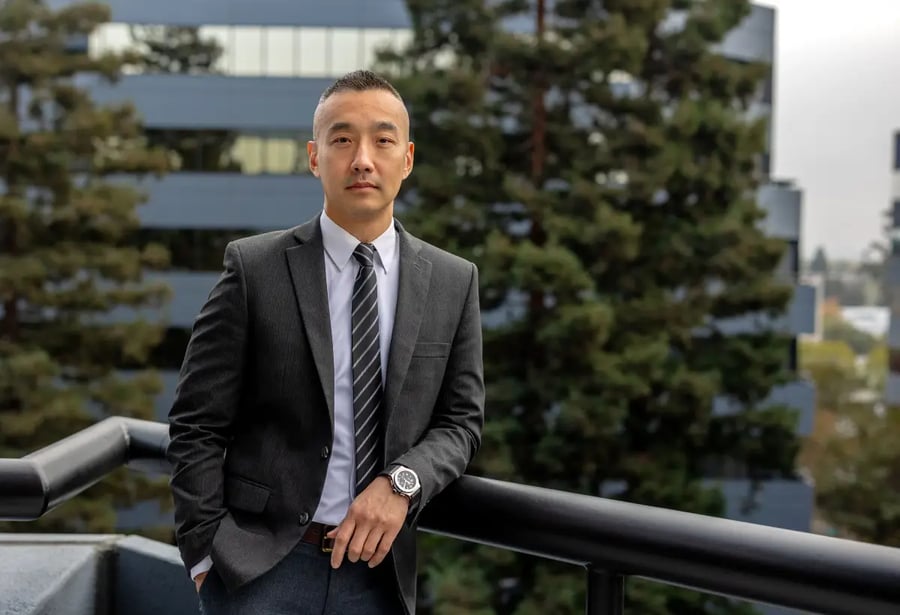
The idea behind the business grew in part from Wang’s own history as an executive-security client. Prior to founding JPT, he worked with multiple security companies and found their approaches surprisingly inflexible. The security was there, but customization wasn’t.
“From my experience, the gaps in the industry weren’t a lack of security companies, but their lack of adaptability to the clients’ individual needs,” says Wang. “Every executive has a different lifestyle, family structure, travel schedule and risk profile, but most of the industry relied on standardized approaches.”
That became a guiding principle for JPT Security: rather than requiring clients to adapt their lives to a standard protection package, the company tailors its approach to the individual.
“Security should be designed around the client, not the reverse,” he says. “Our job is not to create barriers or make someone’s life more complicated; it’s to run discreetly in the background. We reduce unnecessary risk so our clients can focus on leading their companies, spending time with their families and making their lives more efficient.”
JPT Security’s business model offers several forms of protection. Executive services can include armed protection, secure transportation, advance work at locations and travel security. Residential programs combine close protection with threat monitoring, while corporate security can incorporate on-site personnel, access control, monitoring and rapid response. The common thread is an effort to make protection proportional to the client’s actual risk – and to be as unobtrusive as circumstances allow.
“One of the biggest misconceptions is that executive protection is very intrusive,” says Wang. “Clients may picture someone always standing next to them or looking like a bodyguard but the objective of a well-designed program is often exactly the opposite.”
The experts at JPT Security first assess factors such as an executive’s public profile, travel patterns, workplace, family circumstances and specific threats. The result might be a comprehensive executive protection program, but it could also be something narrower, such as travel or residential security.
“We don’t build security programs based on headlines,” says Wang. “We build them based on risk.”
That distinction has become particularly important as the company focuses more attention on companies and leaders participating in what Wang calls the AI economy. The term is intentionally broader than just AI software companies. Wang uses it to encompass the ecosystem supporting AI development, including robotics, semiconductors, autonomous systems, defense technology and the infrastructure required to support them.
“AI is transforming nearly every industry at the same time, and it’s doing it much faster than anything we’ve seen in the past,” says Wang. “As the technology’s influence grows, the public profiles of the executives can grow extremely fast.”
This creates security challenges that previous Silicon Valley technology waves did not, according to Wang and Dakota Dominguez, JPT Security’s vice president of Client Relations.
Dominguez sees another consequence of that compressed trajectory: founders can become prominent – and potentially exposed – before they have had time to think seriously about personal security.
“At a lot of the new AI companies, the executives may be a lot younger than in traditional companies,” he says. “The generation building these companies may not realize what they’re building out is having a global impact.”
The issue isn’t limited to CEOs. Engineers developing important models and technologies can also attract attention. Data centers, meanwhile, have become increasingly visible physical manifestations of the AI boom, creating another category of assets and people that may require protection.
At the same time, AI can provide malicious actors new tools to identify vulnerabilities or devise ways around existing safeguards. That combination of faster-moving companies, newly prominent individuals, critical infrastructure, and evolving threats requires a calculation around when protection becomes necessary.
Executive protection has traditionally carried the image of an expensive service reserved for celebrities, billionaires or executives already facing a known threat. JPT Security is betting that the calculation is changing.
Dominguez argues that companies should weigh the cost of security against the potential cost of disruption rather than wait for a specific incident.
“What I’ve seen over the years with a lot of CEOs is they wait for something to happen, and at that point it’s too late,” says Dominguez. “The impact can extend well beyond the individual. It can disrupt operations and create significant challenges for the organization. A security program introduced proactively is also far less disruptive because it gives executives, their families, and the protection team time to understand routines, build trust, and integrate security naturally into their everyday lives.”
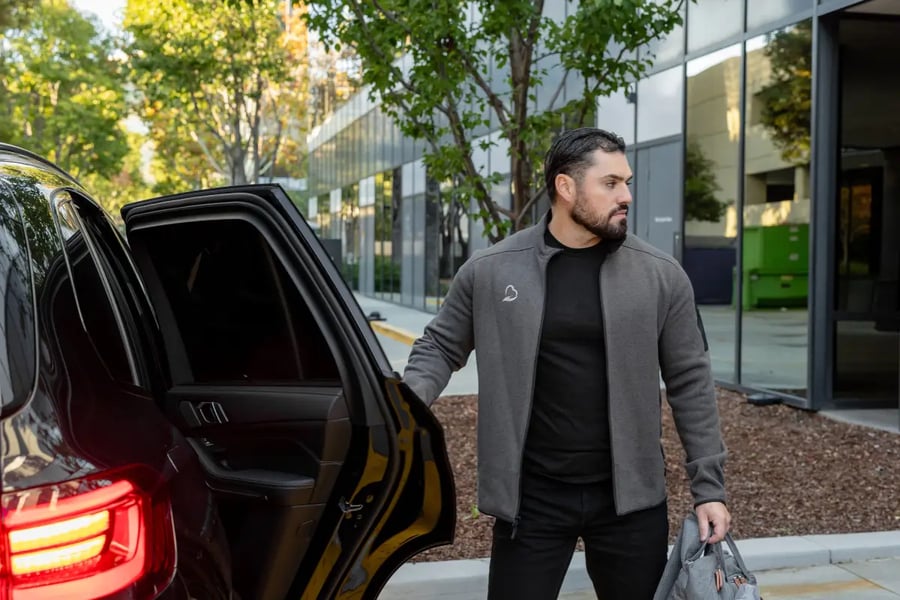
That operational component is central to JPT’s model. Protection personnel aren’t interchangeable, particularly when an agent may spend substantial time with a client and their family. A high level of trust, communication and rapport must be established for the relationship to truly work.
“Once a proper program is in there and effectively working with them, they soon realize that they become much more efficient as well,” says Dominguez, who has extensive experience in the industry. “I try to spend a good amount of time learning our clients’ exact needs, their personalities and the dos and don’ts of their lives.”
He then draws from a network developed during roughly 15 years in executive protection to identify agents appropriate for the assignment. Experience and training matter, but so do discretion, trustwo
rthiness and compatibility with the client.
“We know that they’re good, we know that they’re well trained and we know that they’re discreet,” says Dominguez.
“One of our biggest milestones has been, in my mind, that we’ve earned the trust of all the companies and clients that we protect,” says Wang. “At the end of the day, our clients don’t just hire a security company. They hire people they trust.”
As JPT looks toward its next decade, Wang sees the company’s opportunity closely tied to the people and organizations driving the next wave of technology.
“My goal is that JPT Security becomes the trusted security partner for the companies building the future,” says Wang. “Our role isn’t to build the next generation of technology, but our role is to help protect the people building it.”
For a business built around staying largely out of sight, that may be the point.
“We want to help the people building the future do so with confidence,” says Wang, “They need to know that they, their families and their organizations have a trusted partner helping protect what’s most important to them.
Copyright © 2026 California Business Journal. All Rights Reserved.
For California Business Journal Disclaimers, go to /terms-conditions/.