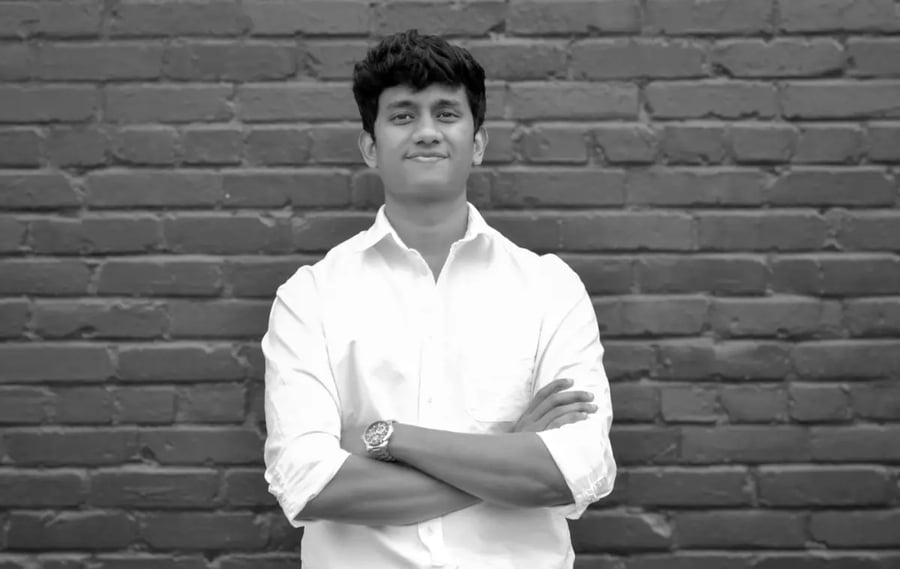
The themed entertainment industry does not get the attention it deserves from the business press. While Hollywood production cycles are affected by strikes and the economics of streaming, theme parks and immersive attractions operate on long-term development timelines, multi-year contracts, and a customer base that continues to grow. It is within this sector that Ashutosh Rokade has built his career — and its trajectory illustrates both the opportunity and the strategy required to succeed in it.
Rokade is a Production Designer at Basemint Creative, a firm that develops experiential environments for major theme park projects both domestic and international. His role encompasses concept development, show set design, storyboarding, concept art, and master planning.
His entry into the field was partly opportunistic. After earning a master’s in production design from SCAD in May 2023, Rokade graduated directly into a Hollywood market frozen by the writers’ strike. As an international graduate, he could not afford to wait. “I began exploring adjacent industries where my skills could be applied,” he explains. Themed entertainment offered project stability, architectural scale, and a growing demand for designers who could merge spatial thinking with storytelling. He joined Basemint as a contractor, converted to full-time, and was promoted within months.
The dual credential — a Bachelor of Architecture from India and a master’s in Production Design — has proven to be a unique competitive advantage. The architectural background solves spatial planning, proportion, and technical coordination challenges, while the production design background contributes greatly with narrative development and visual sequencing design obstacles. In an industry where projects require both creative ambition and buildable precision, that combination is in demand.
One trend Rokade is positioned to capitalize on is the expansion of immersive retail and dining within theme park developments. Parks are no longer content to generate revenue from rides alone. Themed retail and dining environments extend the guest experience beyond the core attractions, increasing dwell time and per-visitor spending. Rokade puts it in practical terms: after experiencing a narrative environment, guests want to continue engaging with that world. Themed dining and retail provide that opportunity. “When designed effectively, these spaces feel like a natural extension of the experience rather than separate commercial zones,” he says, which in turn boosts revenues for the venue.
Technology is reshaping the industry’s economics as well. Rokade has worked extensively with LED Volume technology on film productions, including Quandering Questions, Human Stories, and Carved in Stone. From a business standpoint, these tools reduce location costs and compress timelines by enabling real-time decision-making on set. The tradeoff is a heavier investment in pre-production and digital asset development. The overall effect is a front-loaded workflow that, managed correctly, delivers tighter budget control and more predictable schedules.
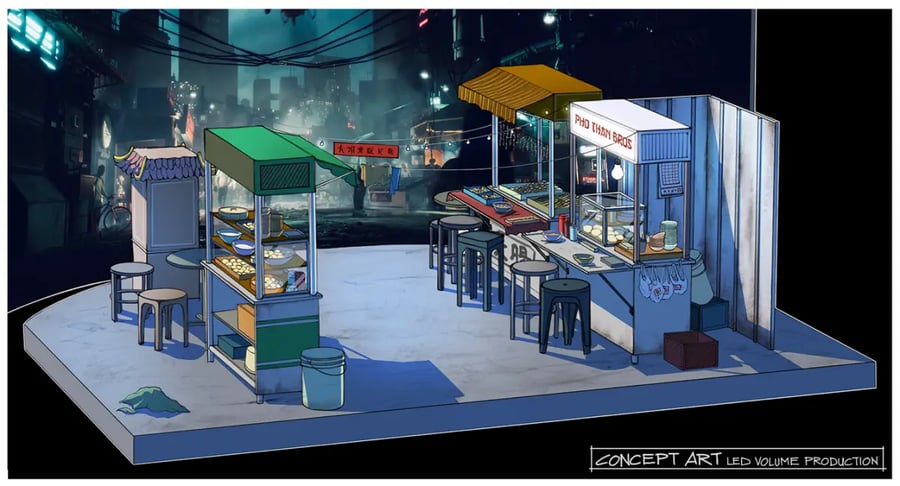
Professional development has been deliberate. The Art Directors Guild selected Rokade for their Production Design Initiative in 2023, providing access to mentorship and industry networks that are typically difficult to reach early in a career. Prior to the U.S., he built experience across Indian film production, working under established production designers including Nitin Desai and serving as assistant art director on features like Gumraah, Panchak, and Manache Shlok.
His assessment of what matters in the industry is refreshingly practical. “Consistency and relationships matter just as much as talent,” he says. “Creative industries operate heavily on trust. Opportunities often come through people who have seen your work and trust your ability to deliver.”
The growth trajectory for immersive entertainment in California appears strong. Rokade identifies the convergence of physical and digital environments — interactive spaces, responsive technologies, multi-use branded environments — as the area with the most potential. His strategy is to continue operating across spatial design and emerging technology, building expertise in projects that combine storytelling with scalable commercial applications.
In an industry where the product is experience itself, designers who can think in both creative and operational terms are increasingly valuable. Rokade appears to understand that equation well.
Copyright © 2026 California Business Journal. All Rights Reserved.
For California Business Journal Disclaimers, go to /terms-conditions/.