
For years, ambitious founders gravitated toward high-cost hubs like Silicon Valley, New York, and Boston, accepting steep taxes and living costs for access to investors, talent, and services. That calculation is shifting. Founders now weigh cost of living, operating expenses, and talent access together, driving interest toward Miami, Austin, Nashville, and Raleigh. Taxes alone rarely build a startup ecosystem. Florida and Texas draw entrepreneurs with no state income tax; Tennessee has none either. But low taxes don't guarantee a strong business environment. The real question is whether the ecosystem justifies the move.
6 Metros Attracting Founders
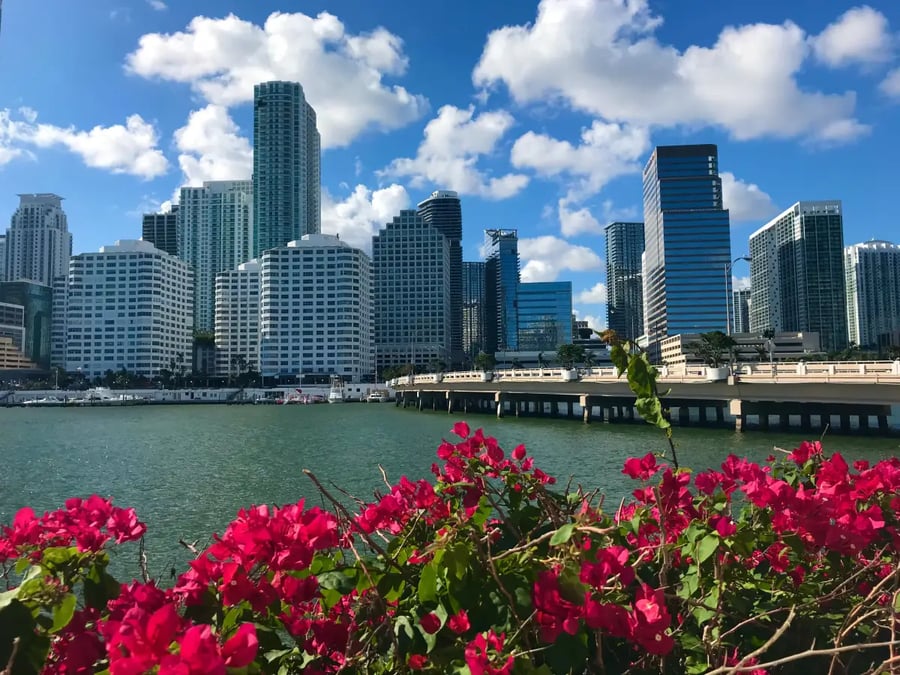
1. Miami-Fort Lauderdale, Florida
Florida's lack of income tax has long drawn wealthy entrepreneurs, but Miami-Fort Lauderdale has also built a genuine startup ecosystem, blending finance, technology, venture capital, real estate, and international business. For founders, the appeal now includes capital access, international markets, affluent customers, and ambitious talent.
2. Austin, Texas
Austin combines strong tech talent with Texas's no-income-tax advantage. Its software, semiconductor, and startup scene rivals Silicon Valley, while universities and established firms feed a deep talent network. In 2026, Apollo Global Management chose Austin for a second headquarters, reinforcing its rise as a broader business hub.
3. Nashville, Tennessee
Nashville pairs strengths in healthcare, music, entertainment, and professional services with Tennessee's elimination of the Hall income tax in 2021, though businesses still face franchise and excise taxes (6.5% on Tennessee taxable income). Its mix of growth, quality of life, and a diversifying workforce lets founders build companies without sacrificing balance.
4. Raleigh-Durham, North Carolina
Raleigh-Durham's appeal rests less on tax migration and more on universities, research institutions, and technology-intensive industries, valuable for biotech, healthcare, software, and research companies. North Carolina's increasingly competitive tax rates add to the draw, but talent depth often outweighs having the lowest tax bill.
5. Atlanta, Georgia
Atlanta offers a major transportation, logistics, media, and financial hub with a labor market extending far beyond the city, useful for founders needing sales, operations, marketing, and finance talent. Georgia taxes individual and corporate income (5.19% corporate rate), so it can't match Florida or Texas on taxes alone, but its regional economy delivers scale smaller markets can't.
6. West Palm Beach, Florida
West Palm Beach is perhaps the most interesting emerging market on the list because its transformation is still underway.
Corporate and technology investment is accelerating across Palm Beach County. ServiceNow is establishing a major regional innovation hub in downtown West Palm Beach, with more than 850 jobs expected over five years. As larger technology companies arrive, they bring experienced employees, customers, suppliers, investors and eventually former employees who may decide to start companies of their own.
For entrepreneurs considering the area, exploring the local market like Tricoli Team's West Palm Beach real estate listings can be a useful first step.
Tax Advantages vs. Talent: What Matters More?
For founders, which matters more depends on company stage. Early on, personal taxes and housing costs weigh heavily. As companies grow, hiring great talent and staying close to investors often matter more than tax savings. The strongest destinations aren't simply the lowest-tax states. They're the ones where tax and talent advantages overlap.
The Bottom Line
Choosing a city on a single metric is fading. Taxes matter, but so do salaries, housing, schools, airports, investors, universities, and available talent. The best decision is where the whole business equation works. That might mean Miami, Austin, Nashville, Raleigh-Durham, or Atlanta. West Palm Beach is one market worth watching closely.
Copyright © 2026 California Business Journal. All Rights Reserved.
For California Business Journal Disclaimers, go to /terms-conditions/.