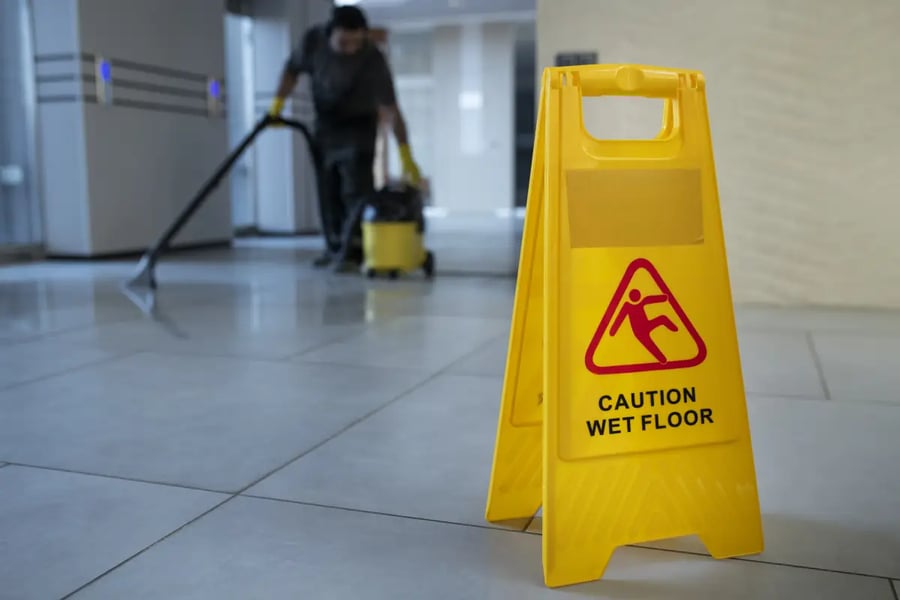
A wet floor sign only helps if someone sees it in time. In janitorial work, that gap between mopping a hallway and posting a warning is where most trouble starts.
Slip and fall incidents rank among the most common claims janitorial businesses face. They can happen on a freshly mopped tile floor, or even a stairwell you serviced an hour earlier. The client wouldn’t normally ask whether the fall was truly your fault before calling their lawyer.
Why Are Slip and Fall Claims So Common in Janitorial Work?
Cleaning creates a temporary hazard by design. Every wet floor, freshly waxed tile, and cleared patch of ice sits in a window where the surface is not yet safe to walk on.
Janitorial crews also move across dozens of different properties, each with its own layout, lighting, and foot traffic pattern. A routine that works fine at one site can leave a hazard at another. A few triggers explain why these claims keep repeating:
- Wet floor signs removed too early or wrongly placed: A sign taken down before the floor is dry leaves the next person walking in with no warning.
- Uneven drying times: Tile, vinyl, and stone all dry at different rates. A routine built for one surface can leave another one slick longer than expected.
- Poor lighting during cleaning hours: A freshly mopped step is hard to spot in dim light. That missed visual cue is often what leads to a fall.
- Equipment left in walkways between tasks: Even a brief gap between finishing one task and starting the next can leave a tripping hazard in a high-traffic path.
None of these require negligence to cause an injury. They only require an ordinary day going slightly wrong. That’s why this risk shows up so often in janitorial work.
What Does Slip and Fall Insurance Cover?
Slip and fall insurance is typically part of your general liability policy. It responds when someone other than an employee gets hurt on a property you were servicing. Choosing the right janitorial service insurance means ensuring your general liability limits match the size and type of properties you clean.
Here is what this coverage generally includes:
- Medical costs for the injured party: These are paid up to your policy limit once a claim tied to the incident is formally filed.
- Legal defense costs for your business: These apply even if the claim against you ends up getting dismissed without a payout.
- Settlement or judgment amounts: These come into play if a court decides the case against your company after the claim is reviewed.
- Response to third-party injuries only: This covers customers, tenants, or visitors, instead of your own crew members on the job.
It also matters where the injury happens relative to your work. A fall in a spot you never touched is a different conversation than a fall on a section you finished mopping. Your slip and fall insurance document should reflect that difference clearly.
Where Do Janitorial Contracts Create Extra Exposure?
Commercial cleaning contracts often shift more liability onto the contractor than owners realize when they sign. Many client agreements include indemnification language. It makes you responsible for injuries on the property. It also includes situations where your work only partly contributed to the incident.
Some property managers also require you to carry specific coverage limits before they sign a slip and fall insurance contract. Falling short on those numbers can cost you the account entirely, regardless of how good your cleaning work is. A few contract details worth reviewing closely before you sign are:
- Minimum liability limits the client requires: Some insurance contracts set thresholds. They’re well above a standard small business policy, and missing that mark can end negotiations early.
- Additional insured status requirements: Many clients want to be named on your policy. They might also expect you to require the same from your own subcontractors.
- Language covering pre-existing hazards: Some contracts try to make you liable for conditions on the property that existed before your crew ever arrived.
- Incident reporting timelines: Contracts often specify how quickly you must report a fall. Missing that window can complicate a slip and fall insurance claim later.
What Should You Look for in a Janitorial Insurance Policy?
Not every general liability policy is written with cleaning work in mind. A policy built for a generic business may not reflect the realities of moving between multiple job sites. It includes handling chemicals or working in spaces you do not control after hours. So, when reviewing a policy, check for the following:
- Coverage for completed operations: Some injuries surface after your crew has already left the property. This coverage extends protection to that window.
- Protection for care and control situations: This matters if your work includes keys, alarm codes, or access to restricted areas after hours.
- Limits that scale with your property types: A slip and fall insurance policy sized for small offices won’t hold up against a large retail contract.
- Coverage should match contract requirements: Your slip and fall insurance should meet or exceed what your client agreements demand.
NIP Group builds programs for janitorial and cleaning contractors that account for these exposures directly. Its MaintenancePro program brings general liability, completed operations, and workers' compensation together under a single policy.
Copyright © 2026 California Business Journal. All Rights Reserved.
For California Business Journal Disclaimers, go to /terms-conditions/.