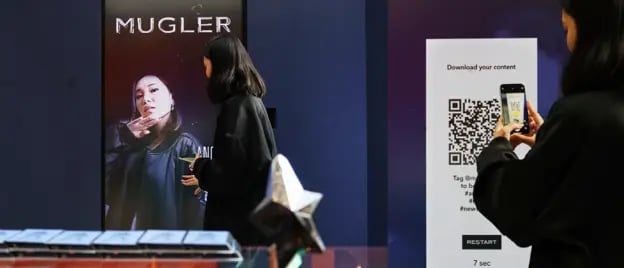
Retail digital transformation is no longer limited to e-commerce, apps, and automated checkout. It is also happening inside stores, across storefront screens, and on the social platforms where customers discover products.
AR mirrors, virtual try-on, and TikTok AR filters are turning passive retail media into interactive experiences. Together, they connect social discovery, product exploration, and in-store engagement.
Retail Is Moving Beyond Passive Screens
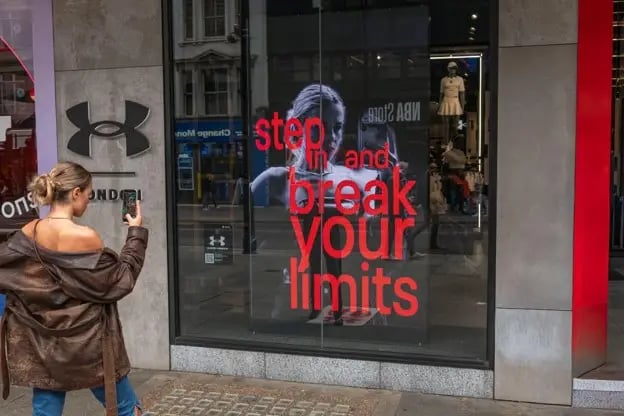
Retail digital transformation is shifting from online platforms back into physical spaces. Storefronts, fitting rooms, displays, and event screens now invite customers to interact rather than simply watch.
These experiences help brands capture attention, support product discovery, encourage content creation, and guide shoppers toward a purchase.
AR Mirrors Create Interactive Stores
AR mirrors use real-time augmented reality to place digital products, branded effects, accessories, or visual elements onto a customer’s reflection.
Shoppers can try on sunglasses, makeup, accessories, or digital fashion, switch between options, record videos, and receive content through a QR code.
This transforms stores from places where products are displayed into spaces where customers can experiment and interact with brands.
AR mirrors can appear in storefronts, fitting rooms, pop-ups, malls, airports, events, and product launches.
They also make physical campaigns more measurable. Brands can track activations, dwell time, interactions, shares, and content downloads—data that traditional signage cannot easily provide.
Virtual Try-On Personalizes Discovery
Virtual try-on allows customers to see how a product may look on them before purchasing. It is widely used in fashion, beauty, eyewear, jewelry, and accessories.
The technology can appear on websites, mobile platforms, retail screens, and in-store mirrors. Its main value is answering a simple question: “What would this look like on me?”
Customers can compare products, explore shades, test complete looks, and browse more options without physically changing clothes or searching through multiple displays.
Online, virtual try-on can reduce uncertainty and improve product discovery. In stores, it helps retailers present a wider collection than they can physically stock, which is especially useful for pop-ups and smaller locations.
However, brands should not overpromise. Not every system provides precise fit or size prediction. Retailers should clearly separate visual inspiration from accurate fitting and represent colors, proportions, and product details faithfully.
TikTok AR Filters Turn Discovery Into Participation
Retail discovery often starts before customers enter a store.
TikTok AR filters let users try digital makeup, accessories, branded effects, or product-inspired visuals directly within the platform. Instead of simply watching an advertisement, users create content with it.
A successful filter can encourage customers to try a product virtually, join a challenge, create a video, share the experience, or continue to a product page or retail location.
These filters are especially effective for beauty, fashion, entertainment, and lifestyle campaigns because they combine product discovery with self-expression. They can also extend a physical activation beyond one location and reach audiences across multiple markets.
Connecting Social and Physical Retail
The strongest strategies connect TikTok filters, virtual try-on, and AR mirrors across the customer journey—from awareness and product discovery to in-store engagement.
Each experience should support a clear goal, such as increasing foot traffic, trials, content creation, or sales. Simple prompts and clear next steps, including QR codes, product links, or saved results, help turn interaction into action.
How FFFACE.ME and LOOOK.AI Support Retail Transformation
FFFACE.ME and its technology platform LOOOK.AI help brands create AR filters, virtual try-on experiences, interactive storefronts, and AI- and AR-powered mirrors.
FFFACE.ME develops the creative experiences, while LOOOK.AI transforms retail screens into interactive customer touchpoints. Together, they connect TikTok discovery, storefront engagement, and in-store virtual try-on.
The Future of Retail Is Interactive
AR mirrors make physical spaces interactive. Virtual try-on personalizes product discovery. TikTok AR filters bring branded experiences into the platforms customers already use.
The goal is not to replace physical retail, but to make it more measurable, personal, responsive, and connected to modern shopping behavior.
Copyright © 2026 California Business Journal. All Rights Reserved.
For California Business Journal Disclaimers, go to /terms-conditions/.